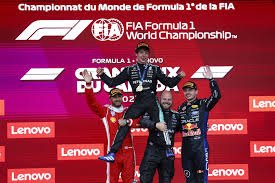
The Canadian Grand Prix has long been celebrated as a theatre for the unexpected, a place where close-confined concrete barriers and unpredictable weather regularly rewrite the Formula 1 playbook. However, the 2026 iteration of the Canadian Grand Prix will likely be remembered for a completely unique set of circumstances: a newly advanced position on the calendar, a bitterly cold track surface, and a psychological civil war at Mercedes that went from simmering to a full boil under the gray skies of Montreal.
As the fifth round of a highly anticipated 2026 World Championship, the weekend delivered a fascinating blend of historical firsts, mechanical heartbreak, and a masterclass in calculated precision from a teenage phenomenon.
The Frostbite Calendar and a Borderline Undriveable Track
The primary talking point before a single wheel spun on track was the Canadian Grand Prix new calendar slot. Shifted a full month earlier than its traditional mid-June date to streamline F1’s logistical footprint, the race weekend ran directly into the teeth of a frigid late-May cold snap. With ambient temperatures hovering in the low teens and the track surface registering a miserable 17°C (62.6°F), the Circuit Gilles-Villeneuve was transformed into something resembling an ice rink.
Morning rain ahead of the sessions refused to evaporate due to the lack of ambient heat. Standing water lingered long past its welcome, triggering an absolute epidemic of front-axle lock-ups, missed braking points into the Turn 10 hairpin, and frantic steering corrections. Drivers routinely struggled to find the thermal window for their slick compounds, making the low-downforce chicanes a terrifying exercise in survival.
Saturday Sprint: Mercedes Draws First Blood and First Sparks
The weekend hosted Montreal’s first-ever Saturday Sprint, and it immediately provided the ignition spark for an intra-team rivalry that team principal Toto Wolff had desperately hoped to manage. George Russell entered the weekend feeling the immense pressure of his 19-year-old teammate Kimi Antonelli’s red-hot form. Antonelli had racked up three consecutive grand prix victories heading into the Canadian Grand Prix, creating a narrative that Russell was already being pushed onto the ropes in his own team.
Sprint Race Results (Top 3):
1. George Russell (Mercedes)
2. Lando Norris (McLaren)
3. Kimi Antonelli (Mercedes)
The Sprint was a masterclass in defensive resilience from Russell, but it was defined by an explosive lap-six encounter between the two Silver Arrows. Antonelli launched an aggressive move around the outside of Turn 1. Russell, executing his right to defend the racing line, firmly shut the door at the Turn 2 apex, forcing the young Italian over the curbs and onto the grass.
An infuriated Antonelli vented his frustration over the team radio, letting the “red mist” descend. A subsequent lock-up into the Turn 8 chicane compromised Antonelli’s race, allowing McLaren’s Lando Norris to sneak through and split the Mercedes duo. While Russell took a much-needed victory to assert his authority, the psychological scars of the encounter set a dramatic baseline for Sunday’s main event.
Sunday Grand Prix: Antonelli’s Historic Four-Peat
If Saturday belonged to Russell’s grit, Sunday belonged to Antonelli’s cold-blooded composure. When the lights went out for the Canadian Grand Prix under threatening skies, the field trod carefully on the treacherously cold asphalt.
The turning point of the world championship battle came in a cruel twist of mechanical fate. Russell, who had been driving a superb, aggressive race to maintain his track position over Antonelli, suffered a catastrophic battery and hybrid energy recovery system failure. The mechanical DNF (Did Not Finish) was a massive body blow to Russell’s title aspirations, effectively leaving him nearly two full race victories behind his teenage teammate in the standings as the sport heads to Monaco.
With his primary rival sidelined, Antonelli showcased why he is considered a generational talent. While veteran drivers slid wide across the slippery chicanes, Antonelli looked like he was driving on a completely different, high-grip track surface. He managed his tires perfectly, navigated the treacherous track temperatures, and crossed the line to secure a historic fourth consecutive Grand Prix victory—an unprecedented “four-peat” for a second-year driver.
Behind the Winners: Red Bull’s Breakthrough and Verstappen’s Ultimatum
Behind the Mercedes drama, Max Verstappen quietly put together his finest performance of a difficult 2026 campaign to secure his first podium finish of the year.
On paper, the Red Bull RB22 still looks like the fourth-best car on the grid, plagued by balance issues that team principal Laurent Mekies admitted they have been working frantically to resolve. Verstappen capitalized on a chaotic strategic misfire by McLaren and Russell’s retirement to bring his car home in second place. While his teammate Isack Hadjar suffered a miserable Canadian Grand Prix—marred by a lack of race pace and a penalty for an erratic defensive swerve on Charles Leclerc—Verstappen extracted every ounce of performance from his machinery.
However, Verstappen’s weekend was overshadowed by his stark off-track comments regarding the 2026 power units. The current regulations enforce a strict 50/50 power split between the internal combustion engine and the electrical battery system, resulting in extreme, mentally exhausting energy management for the drivers. Verstappen openly declared in Montreal that if the FIA and the teams do not successfully negotiate a shift toward a 60/40 thermal-to-electric balance for future regulations, he is fully prepared to walk away from Formula 1 entirely.
Midfield Stalemate and Moving Forward
Further down the order, the Canadian Grand Prix highlighted a heavily fragmented grid. Ferrari looked toothless in the chilly conditions, unable to generate front-tire temperature, leaving Lewis Hamilton and Charles Leclerc fighting for minor points rather than podium finishes. McLaren proved they have the raw pace to challenge with their Miami upgrade package, but operational hesitancy in changing conditions cost them a double podium opportunity.
Ultimately, the Canadian Grand Prix proved that the 2026 season is turning into a fascinating study of human psychology and tire management. Formula 1 leaves Canada with Kimi Antonelli firmly holding the reins of the driver’s championship, a frustrated George Russell looking for answers, and the sport’s most dominant modern champion threatening an early retirement over the very nature of modern racing engines. As the paddock packs up for the European leg, the cold weekend in Montreal may very well be remembered as the weekend the 2026 title race took its definitive shape.
