Home Homepage Post Center Navigating the Captivating Driverless Frontier in 2026

Navigating the Captivating Driverless Frontier in 2026

0


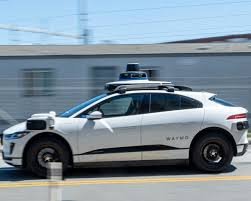
The concept of the “robotaxi”—a fully autonomous, driverless vehicle operating as a commercial taxi—is no longer a speculative concept confined to science fiction. In several American hubs, driverless fleets navigate busy downtown corridors daily. However, as these autonomous vehicle (AV) giants cast their gaze northward, they encounter a uniquely challenging landscape.
Bringing driverless taxis to Canada is not a simple copy-and-paste operation. The transition involves navigating a complex web of municipal anxiety, strict provincial regulatory frameworks, and the unforgiving realities of Canadian winter weather. Assessing this technological frontier requires balancing the undeniable socioeconomic promises of autonomous fleets against their inherent risks, while analyzing how Canada’s major metropolitan centers—Toronto, Montreal, and Vancouver—are responding to the push for driverless integration.

The Pros: The Promise of Driverless Transit

Proponents of driverless taxis point to a transformation in urban mobility, built primarily on three pillars: safety, accessibility, and traffic efficiency.
1. Drastic Reductions in Human-Error Collisions
The primary argument for AV deployment is safety. According to data from Transport Canada, human error—including distracted driving, impairment, fatigue, and speeding—contributes to over 90% of motor vehicle collisions. Robotaxis do not get tired, check a smartphone, or drive under the influence. Equipped with an array of LiDAR, radar, and cameras, these vehicles maintain a continuous 360-degree field of vision and possess reaction times that significantly exceed human capabilities. Industry data from established American markets suggests that autonomous miles driven result in a massive reduction in injury-causing crashes compared to human benchmarks.
2. Enhanced Urban Efficiency and Environmental Gains
Most planned driverless taxi fleets rely entirely on electric vehicles (EVs). Widespread adoption could accelerate the transition away from fossil-fuel-dependent transit. Furthermore, specialized routing algorithms allow autonomous fleets to optimize passenger pickups and choose efficient routes, reducing overall urban congestion. In the long term, a reliable, ubiquitous robotaxi network could eliminate the need for personal car ownership in major cities, freeing up valuable urban real estate currently dedicated to parking structures and surface lots.
3. Accessible Mobility
For elderly Canadians, individuals with visual impairments, or those with mobility restrictions, driverless taxis offer a newfound level of independence. By providing predictable, point-to-point transit without the interpersonal friction or physical barriers sometimes associated with traditional rideshares or overburdened public transit systems, AVs could bridge a critical gap in urban accessibility.

The Cons: Technological and Socioeconomic Roadblocks

Despite these benefits, the integration of driverless taxis introduces significant friction, raising serious technological, economic, and ethical questions.
1. The Winter Deficit
The most glaring technical limitation for AVs in Canada is the climate. Autonomous navigation relies heavily on clear visibility of lane markings, signs, and road topography. Heavy Canadian snowfalls, blinding blizzards, and black ice present severe obstacles. Snow accumulation can instantly obscure cameras and sensors, while packed snow hides the pavement markers that localized digital maps rely on. Teaching an algorithm to distinguish between a harmless drift of powdery snow and a dangerous, solid obstruction remains a significant engineering hurdle.
+———————————————————————–+
| THE CANADIAN WINTER PROBLEM |
+———————————————————————–+
| [Snow & Slush] –> Blurs lane markings, confusing optical maps |
| [Sensor Blockage] –> Ice buildup blinds LiDAR and radar units |
| [Traction Anomalies] –> Black ice requires complex friction physics |
+———————————————————————–+
2. Economic Disruption and Job Displacement
The deployment of commercial robotaxis directly threatens the livelihoods of tens of thousands of Canadian taxi, limo, and rideshare drivers. Municipal leaders are understandably cautious about endorsing a technology that extracts wealth toward international tech conglomerates while displacing local workers into an increasingly precarious gig economy.
3. Urban Congestion and “Ghost Cruising”
Urban planning experts express concern over the phenomenon of empty vehicle idling or “ghost cruising.” When a robotaxi is between passengers, it may simply circle city blocks continuously to avoid paying for parking, adding extra volume to already congested downtown grids.

Regional Breakdown: Regulations in Canada’s Major Hubs

The regulation of autonomous vehicles in Canada is split between tiers of government. The federal government (Transport Canada) oversees manufacturing and import safety standards. However, provincial governments control driver licensing and rules of the road, while municipalities regulate commercial taxi licensing and land use. This division has led to vastly different landscapes across the country.
Toronto (Ontario)
Ontario has been the most regulatory-forward province, establishing an Automated Vehicle Pilot Program that allows for the testing of Level 3, 4, and 5 autonomous vehicles on public roads under specific conditions.
Despite this provincial opening, the City of Toronto has maintained a highly skeptical stance. The city’s recent history includes a cancelled automated shuttle pilot following a collision and the brief deployment of a Magna International autonomous vehicle that ended abruptly amid municipal resistance.
The political divide has intensified with news that Alphabet’s Waymo has approached Mayor Olivia Chow’s office about its intent to apply to the Ontario testing program. The Mayor’s office responded with clear pushback, stating that any autonomous rollout must prove it will not undermine local livelihoods, compress wages, or heighten precarious work conditions. Toronto Met University researchers have also warned that unpassengered robotaxis could worsen the city’s severe gridlock.
Montreal (Quebec)
Quebec’s Code de la sécurité routière allows the public operation of SAE Level 3 autonomous vehicles, provided they are legally authorized for sale in Canada. However, the province maintains a strict gatekeeping process for fully driverless (Level 4 and 5) commercial fleets.
Montreal has approached the technology through controlled, highly localized municipal experiments rather than wide-open commercial deployment. City officials favour integrating automated transport into existing public networks—such as fixed-route autonomous shuttles in closed environments or dense tourism districts—rather than greenlighting independent, privately owned robotaxi networks that compete directly with the STM (Société de transport de Montréal) and the local taxi coalition.
Vancouver (British Columbia)
British Columbia features the most restrictive landscape for autonomous passenger transport in Canada. The provincial government enacted decisive amendments to the Motor Vehicle Act, explicitly prohibiting the operation of Level 3 or higher autonomous vehicles on public roads unless granted a specific, highly regulated exemption.
   [Federal Standards] -> Transport Canada (Vehicle Safety)
          |
   [Provincial Rules] -> BC Motor Vehicle Act (Explicit AV Prohibition)
          |
   [Municipal Impact] -> Vancouver Streets (Closed to Commercial Robotaxis)
This preventative stance means Vancouver’s streets remain closed to commercial robotaxi expansion for the foreseeable future. The province’s approach emphasizes protecting road users and allowing the technology to mature in foreign jurisdictions before exposing BC’s dense, multi-modal urban environments—filled with heavy cyclist and pedestrian traffic—to autonomous experimentation.

Conclusion: A Measured, Calculated Rollout

The trajectory of driverless taxis in Canada is defined by caution. While the safety benefits and operational efficiencies offer a compelling vision for future cities, Canadian regulators are refusing to rush.
By demanding rigorous proof-of-concept testing that can withstand harsh winter climates and forcing tech developers to answer tough questions regarding labour displacement and urban congestion, Canadian cities are positioning themselves as cautious observers rather than eager test subjects. For the near future, the Canadian robotaxi experience will remain limited to tightly controlled pilot projects, moving forward only as fast as safety and social policy allow.

NO COMMENTS

LEAVE A REPLY

Please enter your comment!
Please enter your name here

Exit mobile version