Home Community Ontario Line Subway Project: Construction Updates

Ontario Line Subway Project: Construction Updates

0

Ontario Line subway project Pape Station construction

Ontario Line subway project work is moving through a busy phase in Toronto, with excavation, bridge work, tunnel-launch preparation, and station construction all advancing at once across the corridor. The line is planned as a 15.6-kilometre route with 15 stations from Exhibition Place to Don Mills Road, and Metrolinx says construction is now underway across the project. The scale of the Ontario Line subway project means that progress updates now affect neighbourhoods across Toronto from Exhibition Place to Don Mills.

The latest update matters because the Ontario Line is no longer just a long-range transit promise. In early 2026, work is active from the west end near Exhibition to the east end at Pape, Thorncliffe Park, Flemingdon Park, Don Valley, and East Harbour. That makes this one of the most visible infrastructure projects in Toronto right now.

Toronto’s growth story is increasingly tied to major systems like transit, housing, and technology. Allymonews has already looked at broader change through Toronto Raptors season summary and the impact of AI on society, and the Ontario Line subway project is another example of how the city is being reshaped in real time.

Why the Ontario Line subway project is so important

The Ontario Line is designed to connect Exhibition Place, downtown Toronto, East Harbour, the Don Valley corridor, Thorncliffe Park, Flemingdon Park, and Line 5 Eglinton at Don Mills Road. Metrolinx says the full route will cut end-to-end travel time to 30 minutes or less and connect riders to more than 40 other transit options, including TTC subway lines, GO services, the Eglinton Crosstown LRT, streetcars, and buses.

That scale is why every construction milestone draws attention. The project is not just about one station or one neighbourhood. It is meant to relieve crowding on the wider network while improving travel across several high-demand parts of the city. Metrolinx also says the line will bring 15 new stations to Toronto, which explains why so many work zones are active at the same time. The Ontario Line subway project is considered one of the largest transit investments currently underway in Canada.

Downtown stations are moving from excavation to permanent works

One of the clearest signs of progress is downtown station construction. Metrolinx says excavation is underway or completed at all downtown sites from Corktown to Exhibition, and crews are beginning to add permanent components such as concrete and steel.

A notable recent milestone came at King-Bathurst. Metrolinx lists station excavation there as complete and current work as permanent station construction, while UrbanToronto reported on February 19 that excavation was completed after a major dig roughly 40 metres below street level.

Osgoode is also entering another visible phase. A Metrolinx notice says north vent-shaft excavation is expected to begin in mid-March 2026 and continue for up to seven months, adding another major piece of long-duration construction in the downtown core.

Tunnelling is getting closer at Exhibition and Gerrard

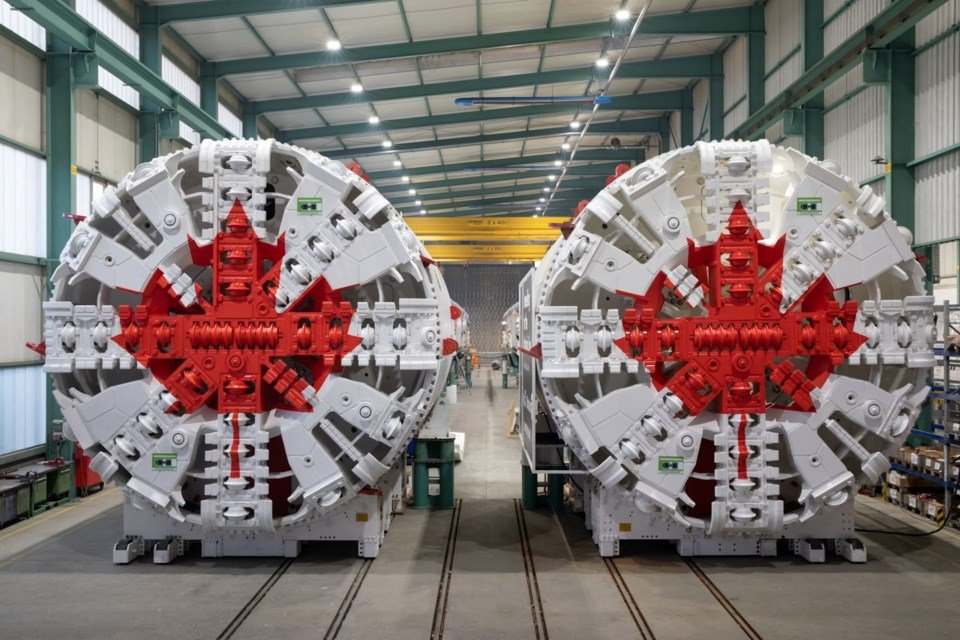
One of the biggest Ontario Line subway project updates is tunnel preparation. Metrolinx says tunnelling from the Exhibition portal is scheduled to begin in 2026, with exact launch timing depending on assembly and testing once all tunnel-boring-machine components are on site. The same page notes the machines are expected to work nearly 40 metres underground and advance at roughly 17 to 20 metres per day.

Metrolinx also says crews at Exhibition are preparing to launch the first two tunnel boring machines, named Libby and Corkie, later this year. At the same time, construction is underway at a second launch shaft at Gerrard Street, where two additional TBMs are expected to carve the northern tunnels.

This matters because tunnelling is one of the most symbolic milestones on any subway build. Once the TBMs are fully operating, the project shifts from surface disruption and excavation toward the actual creation of the underground route.

Pape Station remains one of the most important active sites

Pape Station is one of the most critical interchange points on the future line, and it is also one of the clearest examples of how much work is already underway. In its March 12 update, Metrolinx said major progress has been made at Pape and Danforth since work began in early 2024.

An Ontario government release on February 18 added a specific metric: crews had already excavated about 20 per cent of the Pape site, or roughly 24,000 cubic metres of soil, while the elevated guideway and east-end station package moved forward.

Metrolinx also issued a March 2026 construction notice saying ventilation-shaft construction and bus-loop restoration at Pape were expected to begin in early March and continue for about three months. That means the station is not only being excavated but is also entering a more complex phase involving circulation and supporting infrastructure.

East Harbour and the Don Valley corridor are becoming major focal points

East Harbour is shaping up as one of the line’s most important transfer hubs. Metrolinx says major construction on the East Harbour Transit Hub began in summer 2025 with structural foundation work and rail-corridor widening, while its project page lists foundation drilling for station buildings as having started in May 2025.

UrbanToronto then reported that Metrolinx announced the start of construction on East Harbour’s main station building on February 26, 2026. The future hub is expected to connect the Ontario Line with the Lakeshore East and Stouffville GO lines, making it one of the system’s most consequential transfer points.

Bridge work is also accelerating across the Don corridor. Metrolinx says three new crossings are taking shape at the West Don, Don Valley, and Lower Don, while existing rail bridges are being upgraded through Riverside and Leslieville. East Harbour is expected to become one of the most important interchanges along the Ontario Line subway project once the line opens.

The east-end elevated section is entering a more visible phase

The east side of the route is becoming more tangible too. In February 2026, the province said ground had been broken on the elevated guideway and four new stations in the east end. That package includes Don Valley, Flemingdon Park, Thorncliffe Park, and Cosburn, with foundational work beginning on nearly three kilometres of elevated guideway.

This part of the build is especially important because it shows the Ontario Line is not just a downtown tunnelling project. It is also a major above-ground transit expansion that will change how people move through communities that have long pushed for better rapid transit access.

Neighbourhood impacts remain a major part of the story

The latest Ontario Line subway project update is not only about engineering progress. It is also about the real disruptions required to build a route of this size. Metrolinx says Beth Nealson Drive in Thorncliffe Park is scheduled to close as early as March 23, 2026 for about two years so crews can build a new underpass beneath Ontario Line tracks.

That closure shows where the project stands in 2026: past the abstract planning stage and deep into heavy construction that affects streets, cycling routes, buses, and day-to-day travel. The upside for Metrolinx is that these highly visible disruptions also make the project’s progress easier to track.

Final thoughts

The Ontario Line subway project is now entering one of its most significant construction phases, with progress visible across multiple parts of Toronto. Downtown excavation is giving way to permanent station work, tunnel launch sites are being prepared, Pape is deep into construction, East Harbour is taking shape, and the elevated east-end segment is moving into a more active build stage.

As of March 2026, the biggest takeaway is simple: this project is no longer defined mainly by renderings and political announcements. Concrete milestones on the ground increasingly define it, and Toronto residents are starting to see what that future line will actually require and eventually deliver.

NO COMMENTS

LEAVE A REPLY

Please enter your comment!
Please enter your name here

Exit mobile version