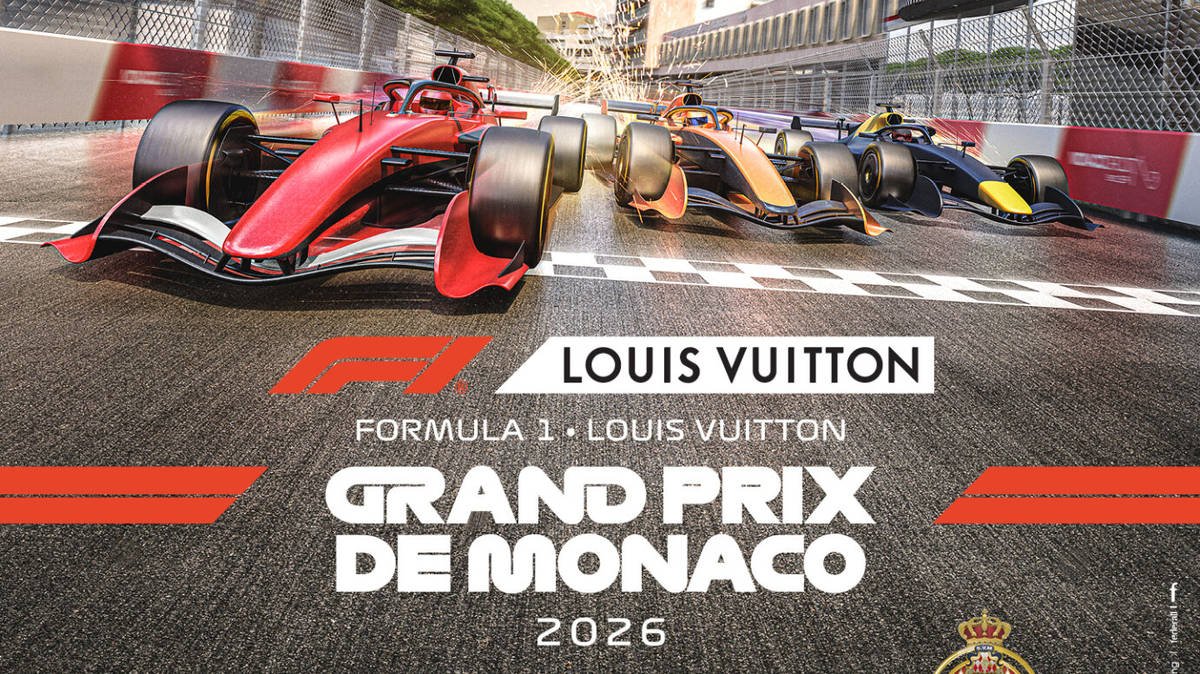
The Formula 1 paddock arrives in the Principality of Monaco for the sixth round of the 2026 World Championship, and the energy for the 2026 Monaco Grand Prix is completely different from anything we’ve seen so far this year. After a relentless start to the season dominated by the technical “upgrade wars” and the strategic gymnastics of F1’s new hybrid era, the Formula 1 Louis Vuitton Grand Prix de Monaco 2026 (June 5–7) promises to strip away the complex artificial aids and deliver an old-school test of raw driver nerve and mechanical compliance.
The 2026 F1 Season To Date
Thus far, the 2026 season has been an absolute masterclass by Mercedes. The silver arrows have taken a clean sweep of the first five Grands Prix, with George Russell and rookie sensation Andrea Kimi Antonelli splitting the victories between them. Most recently, Antonelli secured a stunning victory at the Canadian Grand Prix, reinforcing the team’s current technical supremacy. However, Monaco has a historic reputation for flattening the competitive pecking order, and a series of explosive late-week regulatory bombshells from the FIA might just throw the 2026 Monaco Grand Prix status quo completely out the window.
The Big Story: Active Aero is Banned
The defining talking point heading into the 2026 Monaco Grand Prix is a highly unusual, safety-driven intervention by the FIA. For the first time since the new 2026 regulations were introduced, active aerodynamics will be completely disabled.
The 2026 regulations rely heavily on variable wing positions—colloquially known as “Straight Mode” (low-drag wing configurations) and “Cornering Mode” (high-downforce configurations). These moveable front and rear wings were designed to shed drag on long straights and counteract the energy-harvesting limitations of the current power units.
However, after reviewing simulation data and track maps, the FIA determined that Monte Carlo’s tight, unforgiving confines do not meet the safety criteria for active aero. The ruling fundamentally comes down to two major constraints:
The Three-Second Rule: The FIA mandates that any Straight Mode zone must last for a minimum duration of three seconds to ensure car stability. Monaco simply does not possess a straightaway long enough to clear this threshold.
The Limit of Grip & Outright Safety: Straight Mode slashes drag by roughly 20% and can spike top speeds by up to 20 km/h. Governed by fears that cars would carry dangerous levels of momentum out of the iconic Tunnel section and into the chicane—where run-off zones are virtually non-existent—the governing body chose a preventative stance.
As a result, the movable wing flaps will remain firmly locked in their high-downforce stance for all 78 laps around the 3.337-kilometre circuit. For the first time since the introduction of DRS back in 2011, a Formula 1 race weekend will feature zero movable overtaking aerodynamics.
Engine Mapping: The “Rev 1” Constraint
The technical intrigue doesn’t stop with the bodywork. The 2026 Monaco Grand Prix presents an extreme outlier for the 2026 power units. With its short bursts of acceleration, low-speed corners, and heavy braking zones, the circuit is an absolute goldmine for kinetic energy harvesting. Unlike at Spa or Monza, where long straights threaten to completely drain the hybrid batteries (leading to “clipping” or energy starvation), cars in Monaco will be running with nearly full electrical reserves.
To keep top speeds from climbing to dangerous levels on the short straights, the FIA is mandating a specialized engine software map for this weekend, known internally as “Rev 1.”
[Standard “Base” Map] —> MGU-K cap begins tapering at 290 km/h
[Monaco “Rev 1” Map] —> MGU-K cap begins tapering at 200 km/h —> Zero deployment at 300 km/h
Under standard race conditions, the 350kW MGU-K electrical deployment begins to gradually taper off when a car reaches 290 km/h. Under the “Rev 1” rules, that restriction drops dramatically: maximum power begins to taper off at just 200 km/h, and battery deployment hits absolute zero by the time a car touches 300 km/h.
However, the tactical saviour for drivers will be the Overtake Mode. While active aero is dead for the 2026 Monaco Grand Prix, the tactical push-to-pass battery logic remains. If an attacking driver is within one second of a rival at the detection point just before Rascasse, they can unleash a massive surge of extra electrical torque out of the corners. In Overtake Mode, the power reduction is far less aggressive, allowing a chasing driver to retain 150kW of deployment at 300 km/h. Given the narrow ribbons of tarmac through the Swimming Pool and Anthony Noghes, this sudden differential in torque could provoke highly erratic, side-by-side braking duels.
Team-by-Team Outlook: Who Wins the Chaos?
With the playing field dramatically altered by these one-off technical rules, the engineers have been forced to tear up their standard 2026 playbooks.
Ferrari: The Ultimate Opportunity
The Scuderia is widely tipped as the biggest beneficiary of the active aero ban. While the SF-26 has lacked the ultimate straight-line engine efficiency to consistently match Mercedes on traditional tracks, it possesses arguably the most compliant chassis and superb mechanical balance in low-speed corners. Free from the drag penalties that usually hamper them on high-speed straights, Charles Leclerc and Lewis Hamilton will look to exploit a naturally high-downforce setup. For Leclerc, a home race with a car optimized for ninety-degree corners presents the perfect storm to break the Mercedes stranglehold.
Mercedes: Defending the Streak
The challenge for the championship leaders is managing a sudden shift in development focus. The Mercedes W17 has excelled at balancing active aero transitions, an advantage that is completely neutralized at the 2026 Monaco Grand Prix. However, the team’s current momentum cannot be discounted. George Russell is in the form of his life, and Antonelli’s razor-sharp reflexes are tailor-made for a low-compromise street track.
McLaren: The Dark Horse
McLaren’s short-wheelbase MCL40 is inherently agile, responding brilliantly to rapid directional changes. Without having to worry about optimized low-drag aero states, the team can bolt on a massive, bespoke high-downforce rear wing package. If Lando Norris or Oscar Piastri can nail the front row in qualifying, the car’s mechanical traction out of the Fairmont Hairpin could make them impossible to pass in the 2026 Monaco Grand Prix.
Qualifying is Everything
With no DRS and no active aero, old-school track position reigns supreme. Saturday’s qualifying session will be the most stressful 60 minutes of the season.
Because budget cap restrictions prevent teams from developing complex, one-off aerodynamic components specifically for a single race weekend, engineers will be relying heavily on simulation data, legacy mechanical setups, and pure driver instinct. In Monaco, the wall is the ultimate arbiter. The lighter, nimbler 2026 cars will reward drivers who can brush the barriers at Portier and Massenet with absolute millimetre precision.
Without the safety net of high-speed aerodynamic deployment to fix a poor lap, the 2026 Monaco Grand Prix belongs to the purists. The stage is set for an unpredictable, breathtaking weekend in the jewel of the F1 calendar.
