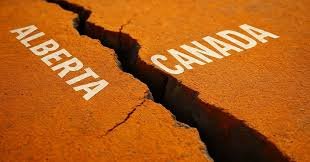
The concept of Western alienation—the distinct feeling among Alberta Canadians that the federal government ignores their interests—is as old as the country itself. However, the conversation has shifted dramatically from general grumbling to concrete political action. With public petitions gaining hundreds of thousands of signatures, and a provincial referendum heavily debated under Premier Danielle Smith’s government, the question is no longer an abstract thought experiment.
Should Alberta separate from Canada? The question ignites intense passion. For proponents, independence represents economic liberation and ultimate self-determination. For opponents, it is a logistical, constitutional, and economic nightmare that could ruin the province.
The Argument for Separation: Sovereign Wealth and Self-Determination
At the absolute core of the “Wexit” or Alberta independence movement is economic frustration. For decades, Alberta has been the economic engine of Canada, largely driven by its massive oil and gas sector.
Historical Catalyst: The 1980 National Energy Program (NEP)
Introduced by Ottawa to control oil prices and levy new taxes, the NEP transferred roughly $100 billion (equivalent to over $218 billion today) out of Alberta. This triggered an economic collapse in the province and birthed a multi-generational distrust of federal overreach.
The contemporary case for separation rests on three pillars:
1. Fiscal Fairness and Equalization
Albertans have long contributed far more to the federal treasury than they receive back in federal services or transfers—a dynamic often blamed on Canada’s equalization program. Separatists argue that by keeping 100% of tax revenues within provincial borders, an independent Alberta could fund world-class infrastructure and health care while maintaining lower tax rates.
2. Regulatory Freedom for Natural Resources
Under federal leadership, natural resource development faces stringent environmental regulations, carbon pricing mechanisms, and pipeline bottlenecks. Independence advocates believe that a sovereign Alberta could approve, build, and export its oil, gas, and emerging hydrogen products to global markets without federal red tape or vetoes.
3. Cultural and Political Autonomy
Many Albertans feel their conservative, free-enterprise values are fundamentally incompatible with a federal Parliament dominated by voters in Ontario and Quebec. Separation promises a political system where Alberta’s leaders answer exclusively to Albertans, ending what they see as “Ottawa dictating provincial affairs.”
The Argument Against Separation: The Reality of Isolation
While the dream of an independent, wealthy petro-state is alluring to some, opponents argue that the real-world execution would lead to economic devastation and legal paralysis.
| The Sovereign Blueprint | The Integration Reality |
| Global Energy Powerhouse | Landlocked geography; dependent on Canada and the U.S. for pipelines and tidewater access. |
| Financial Independence | Assumes responsibility for a massive share of Canada’s $1.2+ trillion national debt. |
| Streamlined Regulation | Lost access to international trade deals like the USMCA; must renegotiate everything from scratch. |
The main counterarguments center on structural barriers:
1. The Landlocked Trap
If Alberta leaves Canada, it does not magically gain access to the ocean. It becomes an independent country surrounded by Canada and the United States. To export its oil or any other goods, it would be at the mercy of Canadian and American regulatory frameworks. Far from gaining freedom, Alberta could find itself with even less leverage to build pipelines through what would then be foreign territory.
2. The Indigenous and Legal Reality
Alberta cannot simply walk away. In 1998, the Supreme Court of Canada ruled in the Reference re Secession of Quebec that unilateral secession is illegal. Under the federal Clarity Act, separation requires a clear majority on a clear question, followed by complex constitutional negotiations involving all provinces.
Furthermore, a critical legal barrier exists regarding Indigenous rights. A significant portion of Alberta‘s land is governed by Numbered Treaties signed between First Nations and the Canadian Crown. In 2026, Alberta courts have increasingly ruled that any unilateral move toward separation violates the honour of the Crown and First Nations’ constitutional rights. Most First Nations leadership groups have expressed staunch opposition to separation, meaning an independent Alberta could face immediate internal territorial disputes.
3. Immediate Economic Instability
Economists warn that even entertaining the idea of separation creates a toxic environment for investment. Major corporations and financial institutions value stability; the threat of exiting Confederation could cause capital flight, tank the local real estate market, and disrupt pension systems like the Canada Pension Plan (CPP), which would require a messy, contested unwinding.
The United States Wildcard
Adding a layer of unpredictability to the modern debate is geopolitical posturing from south of the border. With American political figures occasionally floating the idea of Canada’s resource-rich regions joining the U.S. or becoming a protectorate, foreign interest has surged.
While some separatists view the U.S. as a lucrative fallback partner, critics point out that an independent Alberta would have zero bargaining power against an American economic colossus. Rather than becoming an equal partner, Alberta risks becoming a transactional resource colony for its southern neighbour, completely losing the institutional protections it currently enjoys under the Canadian Charter of Rights and Freedoms.
The Middle Ground: Sovereignty Within Canada
Recognizing the extreme risks of a total break, many Albertans—including Premier Danielle Smith herself—advocate for a middle path: aggressive autonomy within Canada.
“I will be voting for Alberta to remain in Canada, while continuing to work each and every day to restore and strengthen provincial rights under the Canadian constitution.”
Premier Danielle Smith
This strategy uses mechanisms such as the Alberta Sovereignty within a United Canada Act, allowing the province to refuse to enforce federal laws it deems harmful or unconstitutional. The goal is to reshape Confederation from within, demanding a relationship modelled on Quebec’s autonomy—complete with a push for provincial policing, independent tax collection, and control over immigration—while keeping the Canadian passport and currency.
Conclusion: A High-Stakes Gamble
Ultimately, the debate over Alberta separation is a clash between emotional aspiration and structural reality.
For independence to succeed, it relies on a perfect, peaceful transition where Canada and the U.S. willingly sign highly favourable trade deals, First Nations acquiesce to a new sovereign state, and oil markets remain strong enough to buffer the trillions in transitional costs.
For remaining to succeed, the federal government must acknowledge that Western alienation is not a minor grievance to be ignored, but a structural fracture that requires genuine compromise on resource development and fiscal policy.
Separation offers Alberta ultimate control over its laws, but strips away the stability, safety net, and global reputation of being part of a G7 nation. It is a high-stakes gamble where the price of losing is an isolated, landlocked economic crisis—and the price of winning is an uncharted journey into the unknown.
